
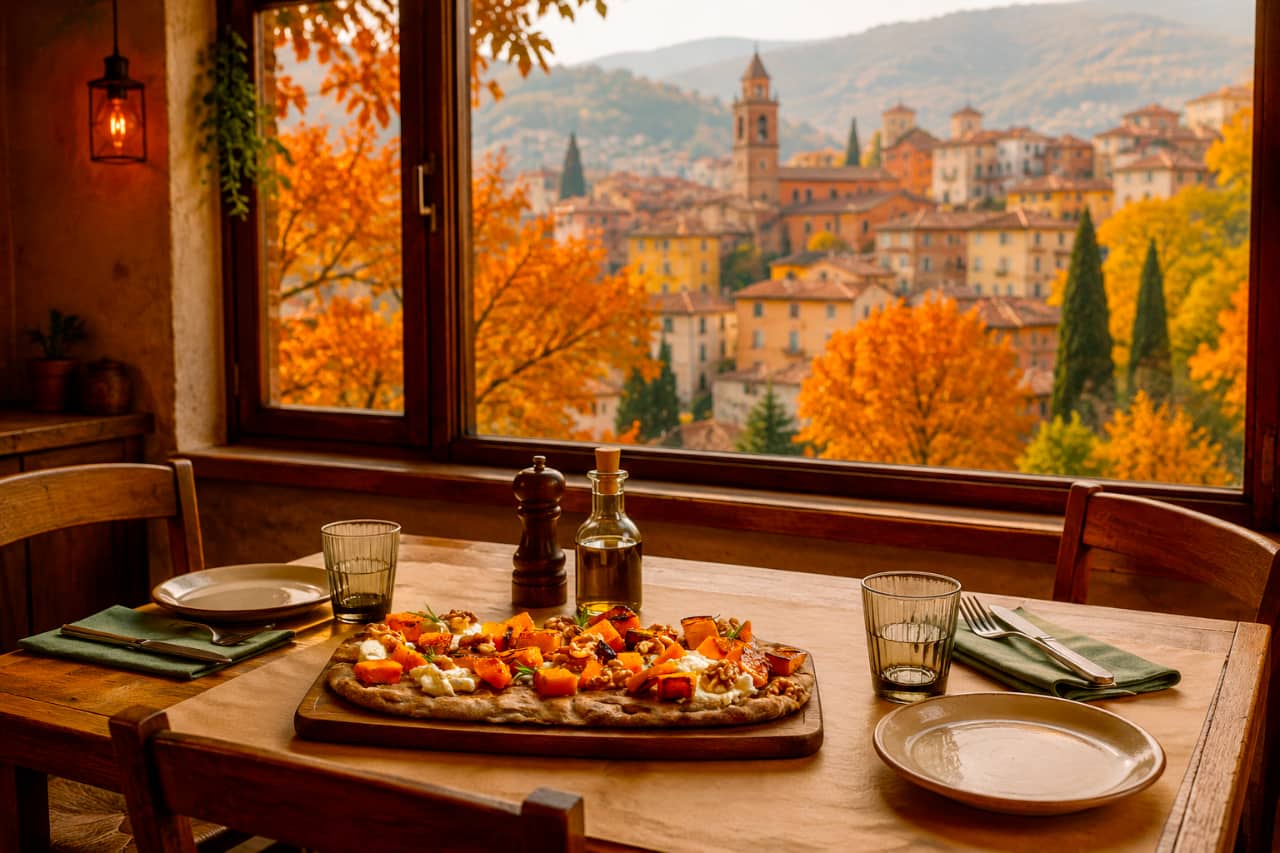
With the arrival of fall raw materials change, the flavors customers are looking for, and, more generally, the way they experience dining out. Adjusting at least part of the menu allows you to replace items that are no longer in season and to offer something new to customers who are regulars at the restaurant.
No revolution in sight
First of all, Don't be afraid of the change of seasons. You won't have to rewrite the menu from scratch or add a large number of new items. All you need to do is Remove some summer-themed Pins and replace them with just a few Fall offerings, distinctive and carefully curated. All you need to do is let people know that a new era has begun, without completely changing the venue's identity.
Of course, the change must be sustainable from both an operational and economic standpoint. The new offerings must fit seamlessly into the kitchen's operations without complicating purchasing, inventory, and service, nor compromise food costs overall.
In this article, we've compiled five Practical tips for transitioning your menu into fall in a smooth and controlled way.
Start with the ingredients, not the recipes
The easiest way to complicate a menu change is to come up with each new Pinsa as a unique offering, with ingredients and preparation methods that can only be used in that recipe. The result is an exponential increase in the number of products to purchase, more space taken up in the warehouse, and a greater risk of generating waste.
It's better to take the route in the opposite direction: Start by selecting a small group of fall ingredients and build your new menu items around them. Pumpkin, mushrooms, and radicchio, For example, they can be paired with cheeses, cold cuts, or vegetables you already have on hand. The same ingredient can also be used in appetizers, first courses, or side dishes, making it easier to use up any leftovers.
As we'll see in more detail later, This doesn't mean making all the pinse look alike.. A versatile ingredient can change completely depending on how it’s paired and prepared: pumpkin can be turned into a purée, baked, or used in small pieces. The rule of thumb is to assign each new ingredient more than one possible destination.
Choose ingredients that are easy to work with
Before adding an ingredient, consider supply continuity, preparation time, shelf life, and performance during service. An ingredient that looks promising on paper can become impractical if it requires time-consuming preparation, produces a lot of waste, isn't always available, or doesn't yield consistent results.
That is why it is a good idea to prioritize raw materials that can be prepared in advance, easily portioned, and stored properly for as long as needed. Pumpkin puree, pre-cooked mushrooms, or pre-cut radicchio allow you to standardize portion sizes and speed up the filling process.
However, you also need to consider moisture: vegetables and mushrooms that aren’t handled properly can release water during cooking and compromise the texture of the pinsa. In short, All these factors must be carefully balanced.
The secret is differentiation
You don't need to include a long list of Pins to signal the change of season. Two or three new suggestions may be enough, as long as they offer different experiences and don't just repeat the same ingredients in slightly different combinations. A limited selection is also easier to describe, prepare, and monitor over time.
You can start with a Pinsa featuring familiar flavors, for example with squash, sausage, and smoked provola cheese. You can pair this with a vegetarian option, such as radicchio, gorgonzola, pears, and walnuts, or a more robust combination featuring mushrooms, Taleggio cheese, and speck.
We must also prevent the idea of abundance leads to overloading the base. Each ingredient must serve a specific purpose; its flavor must be discernible, and the moister elements must be measured and prepared correctly. The timing of their addition also matters: cured meats, dried fruits, aromatic herbs, and certain finishing touches can to taste better after cooking.
Be careful not to overcomplicate the service
Before adding an autumn-themed pinsa to the menu, Outline all the steps needed to prepare it: receiving ingredients, processing, storage, portioning, and filling. The goal is to determine whether the new proposal can be integrated into the existing workflow or whether it introduces operations that are difficult to manage, especially during peak times.
The preparations should be planned in advance and translated into simple procedures. Determining the amount of each ingredient, the container in which to store it, and the exact moment to add it reduces errors and ensures more consistent results. It’s also important that the workstation has the necessary space: adding several ingredients to the line just to sell a few Pinse can create more problems than benefits.
If you have any doubts, try it out during an actual job or under similar conditions, by checking the timing, steps, and ease of execution. If a dish slows down the kitchen, requires constant adjustments, or depends too much on the individual chef's experience, it should be removed or simplified.
Present the new features and check how they're working
A seasonal pinsa should be easy to understand from the moment I read the menu. The name may evoke autumn, but it must be accompanied by a clear description of the main ingredients. Phrases that are too creative or too general force the customer to ask for clarification and make the choice less straightforward. The waitstaff should also be familiar with the ingredients, characteristics, and differences compared to the other options.
Finally, to raise awareness of the new features It is not necessary to reprint the entire menu. You can use a seasonal insert, a chalkboard in the dining area, or a dedicated section on the digital menu. However, it’s important to present the new Pinse as a limited, cohesive selection—not as random additions with no connection to one another.


 IT_IT
 EN
 FR
 DE
 ES
