
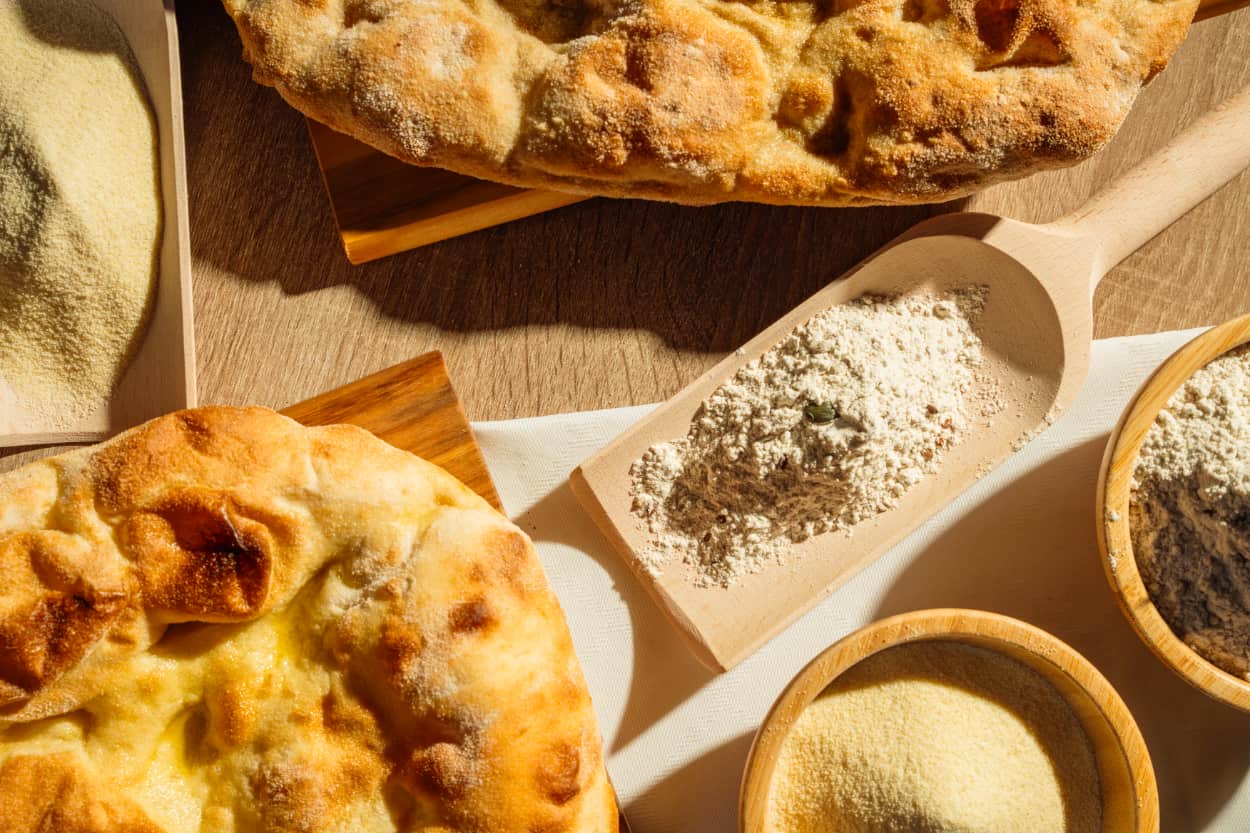
Behind every successful dough there is a carefully selected flour, Why It is she who gives soul and structure to bread, pizza and Roman pinsaIn cooking and baking, wheat flour It is undoubtedly the most used, but also one of the most varied: changes appearance, cooking behaviour and yield based on numerous factors such as type of grain used, degree of refinement, strength and protein contentThis is why knowing it thoroughly is essential, especially for those who work in the world of food.
In this article we will find out Everything you need to know about wheat flour: from how it is obtained to professional uses, including technical characteristics, types, alternatives, and gluten content.
What is wheat flour?
Wheat flour is the product of the milling of wheat grains, one of the most widespread and important crops in the world.
Visually, wheat flour appears as a more or less white powder (or beige, in the case of less refined versions), with a light aroma and a more or less fine consistency, depending on the type of grain and how it is processed. It is the basis of an infinite number of preparations, including bread, desserts, pasta, pizza and pinsa.
What is soft wheat flour?
Soft wheat flour is obtained from grinding of the Triticum aestivum and is the most common of all. There are several types—as we'll see in more detail later—it has a very fine consistency and good water absorption capacity, ideal for soft, well-leavened dough. When we commonly talk about flour, we're referring to soft wheat flour.
What is durum wheat flour (or semolina)?
Durum wheat flour it is obtained by re-milling the semolina, in turn derived from the Triticum durumIt has an amber yellow color, a grainier consistency than soft wheat flour, but finer than classic semolina. It is particularly appreciated for the production of dry pasta, but it is also used in regional bread making thanks to the high protein content and good cooking resistance.
How wheat flour is obtained
Wheat flour is obtained by grinding wheat grains, preceded by a careful cleaning phase. After harvesting, the wheat is selected and cleaned of impurities, dust, seeds of other plants and foreign bodies. Once ready, it is ground using stone or roller mills, based on the technology adopted and the desired result.
During the processing it is defined the degree of sifting, or the percentage of extracted flour compared to the weight of the whole grain. The lower the value (e.g. 50%), the more refined and low in fiber the flour will be; the higher it is (e.g. 80-90%), the more the flour will retain parts of the grain such as the bran and germ. approaching a complete composition.
Depending on the level of sifting and subsequent sieving, flours with different characteristics are obtained: from the finest and lightest (like 00 flour) to the coarsest and richest in fiber, like wholemeal flour. In some cases, the product is also reground to obtain a finer grain size, useful in specific preparations such as bread making with durum wheat.
Types of wheat flour: from 00 to wholemeal
When we talk about wheat flour, we are not referring to a single productIn fact, there are several types, which differ mainly in the degree of refinement of the grain. Each country has its own classification: in Italy, for example, this is based on the amount of bran and germ still present after millingThe main typologies are:
- 00 flourThe most refined, it has a very light color, a very fine grain, and a low fiber content. It is ideal for desserts, fresh pasta, and very elastic doughs.
- 0 flour: Slightly less refined, it retains a small amount of bran. It's widely used for bread and pizza, thanks to its good balance between strength and workability.
- Flour 1 and 2Gradually richer in fiber and micronutrients, they have a coarser grain and a more pronounced beige color. They are excellent for rustic breads, focaccias, and doughs seeking a more natural profile.
- Whole wheat flour: contains all the components of the grain, including the bran and the germ. It has the richest nutritional profile and a stronger tasteIt requires adequate hydration and leavening times.
What is wheat flour used for?
Wheat flour is one of the most versatile raw materials in the entire food landscape. Thanks to its structure and in the presence of starch and proteins, is used in a huge variety of preparations, both artisanal and industrial.
- In the world of baking, is the basic ingredient for the production of bread, focaccia and breadsticks, with different types of flour used based on the desired consistency and leavening.
- In the pastry shop, wheat flour is used in the composition of cakes, biscuits, tarts, sponge cakes and baked products, also selected according to its strength (W) and its ability to absorb fats.
- It is also protagonist in the preparation of pizza, where it plays a central role in the structure and texture of the dough. In Roman pinsa, as we will see later, it is used in combination with other flours such as rice and soy, to obtain a light, digestible, soft and crunchy result.
- In addition to the main areas, wheat flour is used for fresh and dry pasta, to make thickeners for sauces and creams and for industrial preparations.
FAQs about wheat flour
We have collected the most common questions regarding wheat flour, to clarify the frequent doubts related to the use, features and available alternatives.
Are wheat flour and 00 flour the same thing?
Type 00 flour is a specific type of wheat flour, but not all wheat flours are type 00. There are many variations that differ in color, fiber content, kneading behavior, taste, and intended use.
Does wheat flour contain gluten?
Yes, wheat flour contains gluten.In fact, it's one of the foods that most commonly contribute it to the daily diet. However, it's important to clarify what gluten means and how it develops.
Gluten is not a substance already “ready” inside the flour, but is formed when the two main proteins of wheat, glutenin and gliadin, they come into contact with water and are worked (kneaded)From this encounter, an elastic and cohesive network (the gluten mesh) is born, essential for the leavening and structure of products such as bread, pizza, and pinsa. Obviously, there are similar gluten-free products.
The protein content of flour (expressed as a percentage) is a good indicator of the amount of potentially available gluten, but it is the processing of the dough that determines the actual formation and quality of the gluten mesh.
What is the difference between wheat flour and whole wheat flour?
Whole wheat flour is a type of wheat flour obtained by grinding the whole grain, without removing the bran and germ. The result is a product darker, rich in fiber and micronutrients, with a stronger flavour and a different impact on the dough processing.
How to replace wheat flour?
Replacing wheat flour is possible, but it must be done carefully, especially in recipes that require structure and leavening. Alternatives fall into two broad categories:
- Flours with gluten Like spelt, rye, barley, and kamut, they retain some of their baking properties, though with different characteristics in terms of elasticity and flavor. Ideal for rustic breads or custom blends.
- Gluten-free flours such as rice, corn, buckwheat, legumes and millet: suitable for those with intolerances or celiac disease, but require the addition of natural binders to obtain a consistency similar to that of traditional doughs.
Is wheat flour a protein food?
More than protein, wheat flour is mainly composed of carbohydrates (approximately 80%) in the form of starch, making it an important energy source. Proteins account for 9-12% of the total weight.
What does “W” mean in relation to wheat flour?
W is the strength index of the flour, that is, a value that indicates the ability of the dough to retain leavening gases. The higher the value, the stronger the flour is, that is, capable of withstanding long and complex leavening processes.
Wheat flour: the cornerstone of Roman pinsa
Wheat flour is the structural basis of the Roman pinsa doughIt is in fact thanks to its ability to develop the gluten network that the dough is able to sustain the high hydration of the product. and to maintain stability during leavening.
Wheat flour alone, however, is not enough. The lightness that distinguishes pinsa comes from from the synergy with other flours, such as rice and soy, which complete the mix by giving external crunchiness, internal softness and greater digestibility.
Di Marco flours: a special mix for pizza and pinsa
Di Marco is the inventor of the Roman pinsa and has the mission of spread this excellence of baking both among industry professionals food than among final consumers.
To meet the needs of such a diverse audience, The company offers an extremely wide range of products to suit every need. It goes from pre-cooked and instantly frozen bases, designed for street food or for all those businesses that want to offer pinsa without investing in new skills or equipment, until professional flour mixes for pizzerias and pinserias.
In addition to the famous pinsa mix, from which everything originated, Di Marco offers flours designed for every type of pizza: from the classic to the shovel, up to the pan pizzaEach blend is designed to guarantee high technical performance and consistent results, in line with the expectations of industry professionals.
If you want to take this journey with us, we will be able to advise you best. All you have to do is contact us to discover the best solution for your business.


 IT_IT
IT_IT  EN
EN  FR
FR  DE
DE  ES
ES